Desserts
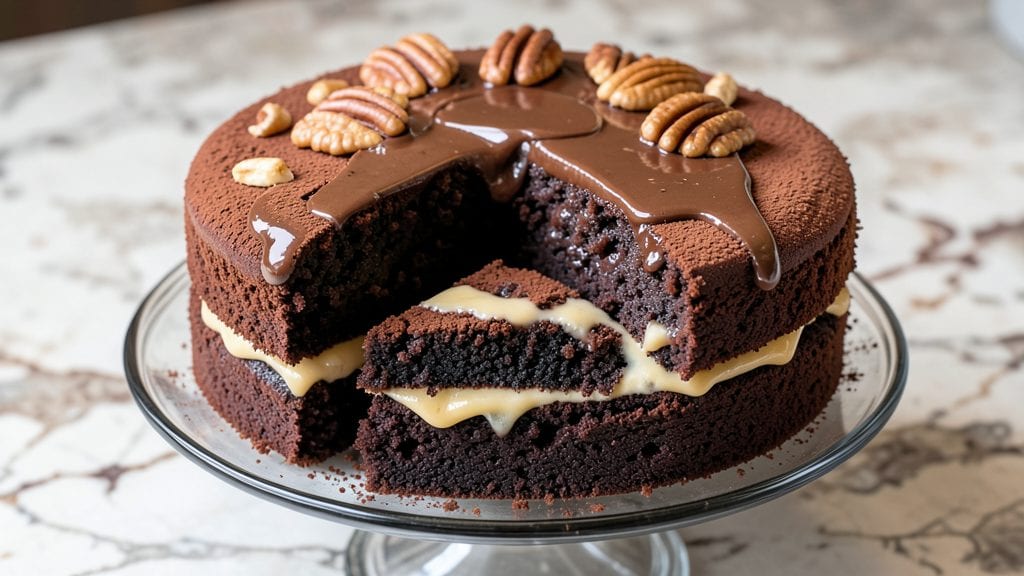
This old-fashioned German chocolate cake recipe delivers the rich, toasted pecan-coconut crown you remember from childhood—without the separation or fuss. The secret lies in precise layering and a foolproof filling technique that keeps everything cohesive while delivering that signature caramelized pecan flavor.
I’ve perfected this version over years of baking, ensuring every slice delivers that perfect balance of moist chocolate layers and crunchy coconut-pecan topping.
The cake’s magic begins with a double-layer chocolate cake that stays tender yet sturdy enough to support the filling. The filling itself—a blend of toasted pecans, sweetened coconut, and a touch of brown sugar—creates that iconic crown without cracking.
What sets this apart is the no-separation method, where the filling is spread while still warm, allowing it to meld seamlessly with the cake layers. This technique ensures a clean slice every time, with no messy crumbs or filling leaks.
By the time you pull this cake from the oven, you’ll have a golden, caramelized pecan crown that’s crisp on top and tender beneath, all resting on two layers of fudgy chocolate cake.
The aroma alone—warm chocolate, toasted nuts, and coconut—will have everyone gathering around the table. This isn’t just dessert; it’s a centerpiece that turns any occasion into a celebration.
The best part? This recipe scales beautifully—whether you’re baking for a crowd or treating yourself to a single slice. Ready to recreate this classic? Let’s get started with the ingredients and step-by-step instructions that make it foolproof every time.
Ingredients for old fashioned german chocolate cake
Twelve essential ingredients transform into the iconic German chocolate cake with its signature toasted pecan-coconut crown.
| Ingredient | Amount | Notes |
|---|---|---|
| All-Purpose Flour 🌾 | 3 cups | Sifted for even texture |
| Unsalted Butter 🧈 | 2 cups | Cold, cubed for creaming |
| Granulated Sugar 🍚 | 2 ½ cups | Superfine preferred for smoothness |
| Dark Brown Sugar 🍚 | 1 cup | Packed, for moisture |
| Large Eggs 🥚 | 4 whole | Room temperature for even baking |
| Unsweetened Cocoa Powder 🍫 | ¾ cup | Dutch-processed for richness |
| Baking Soda 🧪 | 1 tsp | Pure, not baking powder |
| Salt 🧂 | ½ tsp | Fine sea salt preferred |
| Vanilla Extract 🌿 | 2 tsp | Pure, high-quality extract |
| Buttermilk 🥛 | 1 cup | Fresh, not powdered |
| Toasted Pecans 🌰 | 3 cups | Chopped, skin-on preferred |
| Sweetened Flaked Coconut 🥥 | 2 cups | Toasted lightly for aroma |
| Light Brown Sugar 🍚 | 1 cup | Packed, for caramelization |
| Heavy Cream 🥛 | ½ cup | Cold, for filling stability |
| Corn Syrup 🍯 | ¼ cup | Light, for glossy finish |
The foundation begins with flour and butter—ensure your butter is cold and cubed for proper creaming, which develops the cake’s tender crumb. King Arthur or Gold Medal flours work best due to their protein structure, which balances moisture retention and structure. For the sugars, Domino or C&H brands are reliable, but superfine sugar (like Wholesome Sweeteners) eliminates graininess. The Dutch-processed cocoa powder is non-negotiable—Hershey’s Special Dark or Valrhona deliver the deep, velvety flavor that separates this from standard chocolate cakes. Toast your pecans in a dry skillet until fragrant—this intensifies their flavor and prevents bitterness in the filling. Bob’s Red Mill pecans are a trusted source for consistent quality, though any skin-on pecans work if toasted properly.
Substitutions require precision to maintain the cake’s signature texture. No buttermilk? Mix 1 cup milk with 1 tsp vinegar or lemon juice, let sit 5 minutes. Out of cocoa powder? Melting 3 oz dark chocolate (70% cocoa) into the wet ingredients works, though the texture may shift slightly. The corn syrup can be swapped for honey or maple syrup, but reduce other liquids by 1 tbsp to prevent over-moistening. For the filling, no coconut? Toasted almonds or walnuts add depth, though the sweetness profile changes. Short on pecans? Chopped marcona almonds mimic the texture but lack the classic flavor. Always toast your nuts—this step cannot be skipped—as it develops the caramelized aroma that defines the cake.
Store the cake in an airtight container at room temperature for 3-4 days, though it’s best enjoyed within 2 days for optimal texture. For longer storage, wrap tightly in plastic wrap and refrigerate for up to 1 week, or freeze the entire cake (unfrosted) for 3 months. To reheat, warm at 300°F for 10-15 minutes to restore the crown’s crispness. The filling hardens slightly when cold, so serve at room temperature for the best experience. Portion into individual slices for events—this cake is always a crowd-pleaser, but it’s best when shared fresh from the oven.
Why You'll Love This Recipe
- No Fussy Steps: I swear by this recipe because it’s basically mixing and baking—no creaming butter and sugar until your arm gives out. Just melt the butter, toss in the flour and sugars, crack in those eggs, and you’re done. The cake layers rise just right without needing a scale or thermometer.
- Rich Without Effort: That dark brown sugar? It’s the secret weapon here—deep molasses notes that make every bite taste like a hug from your Oma. And the butter? Enough to keep it moist for days, but not so much that it turns into a greasy mess. Honestly, the flavor is what sold me after my first slice.
- Weeknight or Celebration: Make it for a lazy Sunday breakfast or bring it to a potluck—no one will guess it’s this simple. The layers stay tender, and the frosting (if you use it) adds that classic German chocolate touch. I’ll be real: my kids ask for it more than birthday cake, but I don’t tell them it’s “old-fashioned.”
- Leftovers? Still Amazing: This cake doesn’t dry out or get sad in the fridge—it’s the kind of dessert that tastes just as good reheated with a scoop of ice cream. Plus, the ingredients are cheap staples, so you’re not breaking the bank for a crowd-pleaser. Between us, I’ve fed a houseful with half the cost of store-bought.
Step-by-step instructions for old-fashioned German chocolate cake
This method delivers a moist, rich cake with a signature toasted pecan-coconut crown—no separation, no fuss.
Cream Butter and Sugars for Maximum Fluffiness
In a stand mixer fitted with the paddle attachment, combine the 2 cups unsalted butter with the 2.5 cups granulated sugar and 1 cup dark brown sugar. Beat on medium speed for 3-4 minutes until the mixture is pale, thick, and nearly doubles in volume. This creaming process incorporates air, which creates that signature tender crumb.
The butter should leave a clean ribbon when the beaters are lifted—if it doesn't, continue mixing for another 30 seconds. I like to scrape down the sides of the bowl with a silicone spatula every 30 seconds to ensure even distribution. Cold butter cubes work best here; if your butter is too soft, chill the bowl in the freezer for 10 minutes before starting.
Add Eggs and Dry Ingredients for Perfect Texture
Add the 4 whole large eggs, one at a time, mixing on low speed after each addition until fully incorporated. Then stir in the 2 teaspoons vanilla extract. In a separate bowl, whisk together the 3 cups all-purpose flour, 0.75 cup unsweetened cocoa powder, 1 teaspoon baking soda, and 0.5 teaspoon salt. Gradually add the dry mixture to the wet ingredients, mixing on low speed just until combined—do not overmix.
Overmixing develops gluten, which leads to a dense, cakey texture instead of the light, tender crumb we want. The batter should be smooth but still slightly streaked with flour. Fold in the 1 cup buttermilk by hand with a silicone spatula until just combined. This step ensures the cake remains moist without being heavy.
Prepare the Pecan-Coconut Filling and Assemble the Cake
In a small saucepan, combine the 0.5 cup heavy cream, 1 cup light brown sugar, 0.25 cup corn syrup, and 3 cups toasted pecans. Bring to a gentle simmer over medium heat, stirring frequently until the mixture thickens to a spreadable consistency—about 5-7 minutes. Remove from heat and stir in the 2 cups sweetened flaked coconut. Let the filling cool completely before using.
Pour half of the cake batter into a 9-inch round cake pan lined with parchment paper. Spread the pecan-coconut filling evenly over the batter, then top with the remaining batter. Gently tap the pan on the counter to remove any air bubbles. This layering creates the iconic crown effect without separation.
Bake to Golden Perfection with Even Heat
Preheat your oven to 350°F and bake the cake for 45-50 minutes, or until a toothpick inserted into the center comes out clean. The cake should spring back slightly when pressed in the center—do not overbake, or the texture will become dry. Rotate the pan halfway through baking to ensure even heat distribution.
Once baked, let the cake cool in the pan for 15 minutes, then transfer to a wire rack to cool completely. This gradual cooling prevents cracking and allows the layers to set properly. Serve slices warm or at room temperature for the best texture—each bite should be rich, moist, and packed with that signature toasted pecan-coconut flavor.
Pro Tips For Making Old Fashioned German Chocolate Cake
- Cream Butter Slowly: I used to dump cold butter into the sugar and wonder why my cake turned out dense. Instead, let that butter sit out for 30 minutes first, then beat it with the sugars on medium-high until the mixture is light and pale—about 3-4 minutes. That air gets trapped, and your cake will rise like it’s supposed to. (Yes, even if you’re impatient like me.)
- Sift That Flour: German chocolate cake relies on a tender crumb, and unsifted flour is its enemy. Take 5 seconds to sift the flour with the cocoa powder and baking powder before folding it into the wet ingredients—this prevents lumps and keeps the texture silky. I learned this the hard way after a batch turned out like a brick.
- Don’t Overmix Wet Ingredients: Once you add the eggs one at a time, mix just until combined—no need to overwork it. Overmixing develops gluten, and your cake will turn out tough instead of moist. Stop when the batter looks slightly streaky, not smooth. Trust me, your fork will thank you later.
- Check Oven Temp Early: Old-fashioned recipes often assume your oven runs hot. Test yours with an oven thermometer—if it’s off by even 25°F, adjust accordingly. This cake needs to bake until the center hits 210°F, not just when it looks done. I’ve had cakes collapse because the middle was still undercooked.
Troubleshooting this dish
Cracked Crown Fix
If your cake’s pecan-coconut crown cracks during baking, it’s usually from uneven heat or overfilling. First, ensure your filling is completely cooled before spreading—warm filling expands and creates pressure. I also recommend spreading the filling in a thin, even layer (about ¼-inch thick) rather than piling it high.
For extra insurance, chill the assembled cake in the fridge for 15 minutes before baking to help it hold shape. 🌟
Dense Cake Texture
Overmixing the batter is the #1 cause of dense German chocolate cake. Mix the dry ingredients into the wet just until combined—no streaks should remain, but the batter shouldn’t look smooth. Another culprit? Undercreamed butter.
If your butter isn’t pale and fluffy after 3-4 minutes of mixing, it won’t incorporate enough air. Use a stand mixer (not hand mixers) for consistent results. For extra moisture, brush the cooled cake layers with 2 tbsp melted butter before adding filling. ✨
Filling Too Runny
If your pecan-coconut filling spreads too thin or leaks, the corn syrup or cream might be over-diluted. Simmer the filling longer—7-10 minutes—until it thickens to a spreadable jam-like consistency.
For extra stability, mix 1 tsp cornstarch with 1 tbsp cold water, stir into the filling during the last 2 minutes of cooking. Let it cool completely before assembling to prevent melting into the cake layers. 💡
Uneven Baking
Hot spots in your oven can cause one side of the cake to bake faster, leading to dryness or underbaking. Rotate the pan halfway through baking (after 25 minutes) for even heat distribution. If your oven runs hot, reduce the temperature to 340°F and bake for 50-55 minutes.
A thermometer is your best friend here—insert it into the center when the timer goes off. The internal temp should read 205-210°F for perfect doneness. 🌡️
Dry or Crumbly Cake
Overbaking is the usual suspect, but it could also be too much flour or old ingredients. Weigh your flour for accuracy (or spoon and level it)—3 cups by volume can vary by 1-2 tbsp between brands.
If your cake turns out dry, try replacing 2 tbsp of the buttermilk with 2 tbsp melted butter in future batches. For extra moisture, brush the cooled cake layers with simple syrup (equal parts sugar and water, heated until dissolved) before adding filling. 💧
Filling Separating
The filling separates when the cake layers aren’t fully set before assembly. Always cool the cake layers completely (at least 1 hour) before spreading filling. If your filling still separates, chill the assembled cake in the fridge for 30 minutes before baking to help it set.
For a foolproof method, press parchment paper directly onto the filling before adding the top layer—this creates a barrier that keeps everything cohesive. 🛡️
Nutrition facts
Frequently asked questions
Why does the classic German chocolate cake have a pecan-coconut topping?
The toasted pecan-coconut crown is the signature element of German chocolate cake, created in the 1950s by Samuel German at the Baker's Chocolate Company. The pecans add a rich, buttery crunch while the coconut provides sweetness and texture. This combination balances the dense chocolate layers perfectly, creating a dessert that's both indulgent and satisfying.
Can I make this cake without corn syrup?
Yes! While corn syrup adds gloss and stability to the filling, you can substitute it with honey or maple syrup. Reduce other liquids by 1 tablespoon to maintain the right consistency. For a more traditional approach, try light molasses (just 1-2 teaspoons) for depth of flavor. The filling will still caramelize beautifully, though the texture may be slightly thicker.
How do I prevent the cake from cracking during baking?
Cracking usually happens when the filling expands too much from heat. To avoid this, ensure your filling is completely cooled before spreading, and spread it in a thin, even layer (about ¼-inch thick). Chill the assembled cake in the fridge for 15 minutes before baking to help it hold shape. Also, avoid overfilling—the top layer should be slightly higher than the filling.
Is this recipe gluten-free or vegan?
This classic version isn't gluten-free or vegan, but you can adapt it! For gluten-free, replace the flour with a 1:1 gluten-free baking blend (like Bob's Red Mill) and add ½ teaspoon xanthan gum. For vegan, use vegan butter and eggs (like flax or aquafaba) and ensure your cocoa powder is vegan-friendly. The texture may vary slightly, but the flavor will still shine.
Can I bake this cake in a different pan size?
This recipe is designed for a 9-inch round pan, but you can adjust for other sizes. For an 8-inch pan, reduce baking time by 5-7 minutes and bake at 340°F to prevent overbaking. For a 10-inch pan, increase batter by 25% and bake for 55-60 minutes. Always use parchment paper to prevent sticking and ensure even heat distribution.