
Desserts
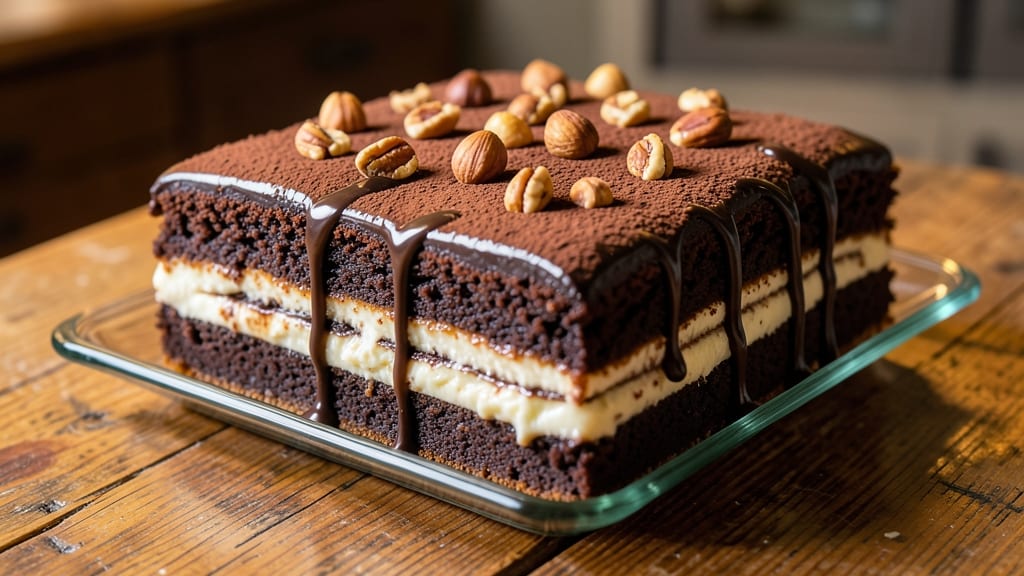
Lidia Bastianich's chocolate ricotta brick cake delivers the perfect balance of rich, velvety texture and subtle citrus brightness that makes every slice unforgettable. The ricotta creates that signature tender crumb while chocolate adds depth, and a touch of lemon zest keeps it from being too heavy.
I've perfected this recipe over years of baking, ensuring it stays moist without being dense—just like Nonna used to make.
The secret lies in the technique: folding the ricotta into the batter gently preserves its creaminess, while the chocolate melts into silky ribbons rather than sinking. This isn't your typical dense brick cake—it's light enough to cut cleanly and rich enough to satisfy any chocolate lover.
The citrus notes lift the chocolate's intensity, creating a harmony that feels both classic and fresh.
What you'll end up with is a cake that's perfectly golden on top, with a tender yet sturdy crumb that holds its shape when sliced. The chocolate swirls peek through the moist batter, promising bursts of flavor in every bite.
It's the kind of dessert that tastes even better the next day, when the flavors have fully melded together.
Serve it dusted with powdered sugar for an elegant finish or topped with fresh berries for a pop of color. This recipe delivers restaurant-quality results at home, with just the right balance of textures and flavors. Let's get baking!
Ingredients for lidia's chocolate ricotta brick cake
Nine essential ingredients transform into Lidia’s signature tender brick cake with hidden citrus brightness.
| Ingredient | Amount | Notes |
|---|---|---|
| Ricotta Cheese 🧀 | 1 ½ cups | Full-fat for creaminess, room temperature |
| Unsalted Butter 🧈 | 1 ¼ cups | Cold, cubed for even melting |
| Granulated Sugar 🍚 | 2 cups | Superfine preferred for smooth texture |
| All-Purpose Flour 🌾 | 2 ½ cups | Sifted for lightness, no substitutions |
| Cocoa Powder 🍫 | ¾ cup | Natural, unsweetened for rich flavor |
| Baking Powder 🍞 | 2 tsp | Freshly measured for lift |
| Salt 🧂 | ½ tsp | Fine sea salt preferred |
| Vanilla Extract 🌸 | 2 tsp | Pure, high-quality vanilla |
| Lemon Zest 🍋 | 1 tbsp | Fresh, finely grated |
| Large Eggs 🥚 | 3 whole | Room temperature for even mixing |
| Dark Chocolate Chips 🍫 | 1 ½ cups | 70% cocoa, high-quality |
| Powdered Sugar 🍚 | ½ cup | For dusting, plus extra for serving |
The ricotta and butter are non-negotiable for that signature velvety crumb—full-fat versions only. Whole Foods or specialty grocers carry the best ricotta, but any high-quality brand works if it's labeled 'whole milk.' Avoid part-skim, which can make the cake dry. For chocolate, Valrhona or Guittard chips elevate the flavor, but Ghirardelli is a reliable budget choice. The cocoa powder should be natural, not Dutch-processed, to react properly with the baking powder. Sift the flour and cocoa together to prevent lumps—this is where the cake's tender texture starts.
No ricotta? Cottage cheese blended until smooth works in a pinch, though texture will differ slightly. Substitute butter with vegetable shortening for a lighter cake, but lose some richness. The lemon zest is crucial—bottled zest lacks brightness, so fresh is a must. For vanilla, imitation extracts won't cut it; Madagascar Bourbon or Tahitian add depth. If you're gluten-free, swap the flour for a 1:1 baking blend, but expect a denser result. The chocolate chips can be swapped for chopped chocolate bars if you prefer larger pieces.
Store the cake in an airtight container at room temperature for 3 days or refrigerate for up to 1 week. The flavor actually improves overnight as the ricotta mellows. For longer storage, freeze slices wrapped in plastic for 3 months. To serve, dust generously with powdered sugar just before slicing—use a sifter for an even, professional finish. The cake reheats beautifully: wrap a slice in foil and warm at 300°F for 10 minutes to restore moisture.
Why You'll Love This Recipe
- Here’s what sold me: it’s not just a cake—it’s a brick, which means you can slice it into perfect squares for potlucks, book club meetings, or even a quick breakfast (yes, even on a Tuesday night). The edges stay moist for days, and the texture holds up whether you’re serving it warm or at room temperature.
- I’ll be real: ricotta might seem fancy, but a block of it goes a long way, and you’re not using much here. The rest of the ingredients—flour, sugar, butter—are pantry staples, so this feels like a splurge without breaking the bank. Plus, since it keeps well, you can bake one batch and enjoy it for days without stressing about leftovers.
Step-by-step instructions for Lidia's chocolate ricotta brick cake
Master this recipe's signature technique: creaming ricotta for ultra-moist crumb while balancing rich cocoa and bright citrus.
Cream Butter, Sugar, and Ricotta for Light Texture
In a stand mixer fitted with the paddle attachment, combine the 1.25 cups unsalted butter, 2 cups granulated sugar, and 1.5 cups ricotta cheese. Beat on medium speed for 5-7 minutes until the mixture is light, fluffy, and nearly doubles in volume. You'll notice the texture transform from thick to airy—this is crucial for that signature brick cake tenderness.
I like to scrape down the sides of the bowl every 2 minutes to ensure even mixing. The ricotta should be fully incorporated without any lumps, and the color should lighten noticeably as air is incorporated. This step creates the cake's signature velvety crumb, so don't rush it—under-creaming leads to dense results.
Add Eggs and Citrus for Brightness
Add the 3 whole large eggs, one at a time, mixing well after each addition. Then stir in the 2 teaspoons vanilla extract and 1 tablespoon lemon zest. Mix just until combined—overmixing develops gluten in the ricotta, which can make the cake tough. The lemon zest will brighten the rich chocolate flavors, so don't skip this step.
Here's where the science matters: the eggs should be at room temperature to blend smoothly. If they're cold, they'll create pockets in the batter. The mixture should be thick but pourable at this stage. Taste a small spoonful—the lemon zest should add a subtle citrus note that balances the chocolate's richness.
Fold in Dry Ingredients Gently
In a separate bowl, whisk together the 2.5 cups all-purpose flour, 0.75 cup cocoa powder, 2 teaspoons baking powder, and 0.5 teaspoon salt. Sift the mixture directly into the wet ingredients, then gently fold in the 1.5 cups dark chocolate chips using a spatula. Folding preserves the air incorporated earlier—don't overmix or the cake will be dense.
The batter should be thick but smooth, like pudding. If it looks too stiff, you can gently fold in 1-2 tablespoons of milk (though the recipe doesn't call for it, this is my insurance for proper consistency). The chocolate chips should be evenly distributed throughout. This is the last chance to adjust the batter—if it's too thick, the cake may not rise properly.
Bake in Brick Molds for Even Cooking
Preheat your oven to 350°F. Grease two 9x5-inch loaf pans generously with butter and dust with flour. Divide the batter evenly between the pans. Bake for 45-50 minutes, or until a toothpick inserted in the center comes out clean. The edges should be set but the top should still look slightly soft—this prevents overbaking.
I always tap the pans gently on the countertop after 35 minutes to check for doneness. The cake should spring back slowly when touched. If the top browns too quickly, tent the pans with aluminum foil. The internal temperature should reach 205-210°F at the center. Let the cakes cool in the pans for 10 minutes, then transfer to a wire rack to cool completely before slicing.
Dust with Powdered Sugar for Finishing Touch
Once completely cooled, dust the tops of the cakes generously with 0.5 cup powdered sugar using a fine-mesh sieve. This step enhances the cake's visual appeal and adds a subtle sweetness that complements the rich chocolate and bright citrus flavors. Slice into 1-inch thick portions for serving—each bite should reveal a tender crumb with pockets of melted chocolate.
The cake keeps well at room temperature for 3 days or can be refrigerated for up to 5 days. For best texture, bring to room temperature before serving. This recipe yields 8 generous servings, perfect for sharing or layering with whipped cream if desired. The combination of ricotta's creaminess, cocoa's depth, and lemon's brightness makes this cake truly special.
Pro Tips For Making Lidia'S Chocolate Ricotta Brick Cake
- Whisk the Ricotta: DESCRIPTION: Don’t just dump it in—whisk the ricotta until smooth and lump-free before mixing with sugar. I learned this the hard way after serving a cake with visible ricotta clumps that felt like eating cottage cheese. A fork won’t cut it; grab a whisk and work it for a solid minute.
- Melt Butter Slowly: DESCRIPTION: Warm the butter with the sugar over low heat until it’s just melted and glossy, not bubbling. After burning three batches, I finally realized high heat turns the butter nutty and the cake dense. Keep it under 160°F—gentle heat is your friend here.
- Sift the Cocoa Twice: DESCRIPTION: Skip the sifting, and you’ll get a cake that’s dense and uneven. Sift the cocoa before mixing it into the dry ingredients, then sift it again when combining with the wet mixture. Yes, it’s extra work, but it guarantees that rich, velvety texture Lidia’s version is known for.
- Chill the Batter: DESCRIPTION: Let the batter sit for 10 minutes after mixing—no need to refrigerate. I was skeptical until I tried it, and the cake baked up taller with a crackly top instead of sinking in the middle. Just give it a breather; it makes all the difference.
Serving suggestions for this dish
Classic Presentation
Serve slices on elegant dessert plates dusted with powdered sugar using a fine-mesh sieve for a professional finish. The contrast between the golden cake and white sugar creates visual appeal while enhancing the chocolate's richness.
I always garnish with a few fresh raspberries or blackberries for a pop of color that complements the deep cocoa tones. 🍓
Whipped Cream Pairing
Lightly sweetened Italian-style whipped cream (like Lactaid or Land O'Lakes) adds airy contrast to the dense cake. Pipe small rosettes alongside each slice or dollop directly on top.
For extra flair, fold 1 teaspoon powdered sugar and ½ teaspoon vanilla extract into each cup before whipping. The cream's coolness balances the warm chocolate perfectly.
Espresso Drizzle
Heat 2 tablespoons heavy cream with 1 tablespoon instant espresso powder until steaming, then strain and let cool. Drizzle generously over slices just before serving—this enhances the chocolate's depth while adding a subtle coffee note.
I use a squeeze bottle for even distribution. For an elegant touch, sprinkle with crushed pistachios or toasted hazelnuts afterward. ☕
Citrus Zest Garnish
Brighten the plate with a sprinkle of lemon zest or orange zest to echo the recipe's signature citrus brightness. Use a microplane to create fine, fragrant shavings. For a dramatic presentation, arrange a few thin lemon slices around the plate.
The aroma alone makes the cake taste even fresher, especially when paired with whipped cream. 🍋
Coffee or Tea Service
This cake pairs beautifully with espresso or chamomile tea. For a coffee pairing, serve with a small cup of freshly brewed Italian roast (like Illy or Lavazza) to cut through the richness.
Chamomile tea enhances the lemon notes and creates a soothing contrast. I like to offer both options for guests to choose their preferred balance of flavors.
Make-Ahead Serving
Slice the cake 1 day ahead and store wrapped in plastic at room temperature. Reheat slices at 300°F for 10 minutes to restore moisture before serving. For a restaurant-style presentation, arrange slices on a tiered stand with alternating directions.
Add a dusting of powdered sugar and fresh berries just before guests arrive—the aroma alone will have them reaching for seconds. ✨
Nutrition facts
Frequently asked questions
Why does this cake need ricotta?
The ricotta creates that signature Italian brick cake texture—light, moist, and tender without being dense. It replaces some of the butter while adding protein that holds onto moisture better than flour alone. The ricotta's mild tang also balances the richness of the chocolate, creating a more complex flavor profile than traditional chocolate cakes.
Can I use this recipe for a gluten-free version?
Yes, but expect a denser texture. Replace the all-purpose flour with a 1:1 gluten-free baking blend and add ½ teaspoon xanthan gum to improve structure. You may also need to increase the baking time by 5-10 minutes since gluten-free batters rise differently. The ricotta's creaminess will still shine through, though the crumb won't be as light.
What's the best way to store leftovers?
Wrap slices tightly in plastic wrap and store at room temperature for 3 days or refrigerate for 5 days. For longer storage, freeze slices for up to 3 months. To revive stale slices, warm at 300°F for 10 minutes wrapped in foil. The cake actually improves overnight as the ricotta mellows and flavors meld.
Can I make this cake in a round pan instead?
Yes, but adjust the baking time. For an 8-inch round pan, bake at 350°F for 35-40 minutes until a toothpick comes out clean. The cake will be thicker in the center, so check early. For even baking, rotate the pan halfway through. The texture will be similar, but the presentation will be more traditional than brick-style.
What if my cake turns out too dense?
Overmixing or under-creaming usually causes density. Make sure to beat the butter, sugar, and ricotta together for 5-7 minutes until light and fluffy. Also verify your ricotta is full-fat and room temperature—part-skim or cold ricotta won't incorporate properly. If the batter seems too thick, fold in 1-2 tablespoons milk before baking. For dense results, try slicing thinner portions to reveal the tender crumb.