
Desserts
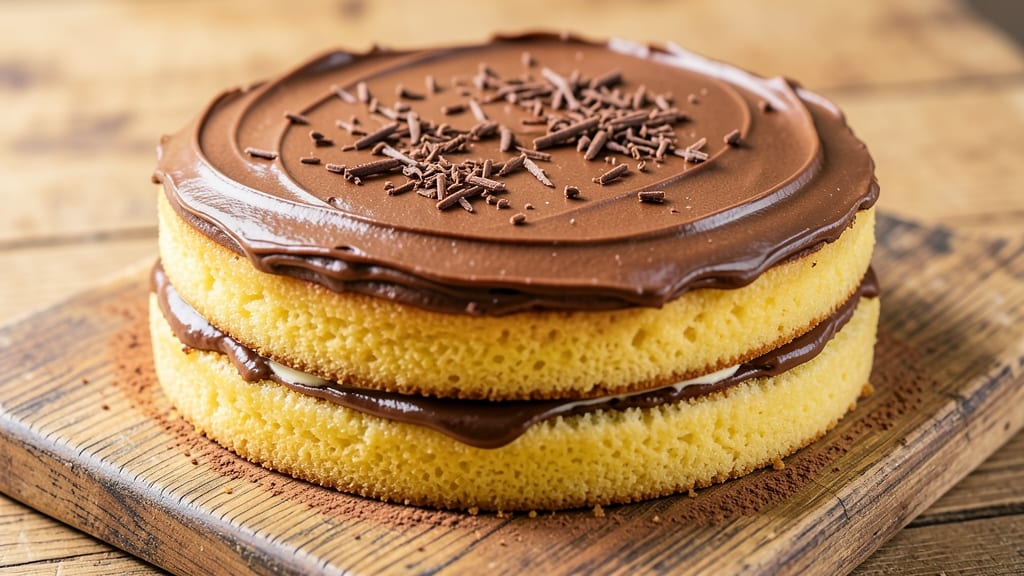
This classic yellow cake with chocolate frosting recipe delivers the perfect balance of tender vanilla layers and velvety ganache—every bite is a nostalgic celebration of bakery-quality dessert at home. The secret lies in room-temperature ingredients and precise baking times, ensuring a moist crumb that stays fresh for days.
I’ve tested this recipe countless times to perfect the texture, so you’ll never have a dry cake or grainy frosting again.
The cake itself is simple yet foolproof, requiring just a few pantry staples and 350°F oven heat for 25-30 minutes. The frosting, made with rich chocolate ganache, is easier than it looks—no fancy techniques required.
What sets this apart is the way the frosting clings to the cake without sliding off, creating that signature layered look you’d expect from a professional bakery.
By the time you’re done, you’ll have a moist, golden cake with a smooth, glossy chocolate finish that’s impossible to resist. The frosting stays firm at room temperature but melts beautifully on your tongue, making this the ultimate crowd-pleaser for birthdays, holidays, or just because.
Each slice is a perfect blend of vanilla sweetness and deep chocolate richness.
This recipe scales easily for gatherings, and leftovers keep well for 3-4 days in the fridge or can be frozen for up to 2 months. Whether you’re a beginner or an experienced baker, the step-by-step instructions ensure restaurant-quality results every time. Let’s get started on creating your perfect cake.
Ingredients for classic yellow cake with chocolate frosting
Twelve simple ingredients transform into a bakery-worthy yellow cake with velvety ganache frosting—moist crumb guaranteed.
| Ingredient | Amount | Notes |
|---|---|---|
| All-Purpose Flour 🌾 | 2 ½ cups | Sifted for light texture |
| Granulated Sugar 🍚 | 1 ¾ cups | White or light brown |
| Unsalted Butter 🧈 | 1 cup | Room temperature, full-fat |
| Large Eggs 🥚 | 4 whole | Room temperature, separated |
| Vanilla Extract 🌿 | 2 tsp | Pure, high-quality extract |
| Baking Powder 🧂 | 2 tsp | Diamond Crystal preferred |
| Salt 🧂 | ½ tsp | Fine sea salt |
| Milk 🥛 | ¾ cup | Room temperature, any variety |
| Dark Chocolate Chips 🍫 | 1 ½ cups | Semi-sweet, 60% cocoa |
| Heavy Whipping Cream 🥛 | 1 cup | Full-fat, cold for frosting |
| Powdered Sugar 🍚 | 3 cups | Sifted for smooth frosting |
| Unsalted Butter 🧈 | ½ cup | Room temperature, for frosting |
| Vanilla Extract 🌿 | 1 tsp | Same as cake, for frosting |
| Pinch 🧂 | 1 pinch | Salt for frosting balance |
The flour is non-negotiable—King Arthur or Gold Medal brands yield the lightest crumb. Butter must be room temperature (pressable but not greasy), so take it out 1 hour before baking. Eggs should be separated for the classic ribbons, though mixing yolks and whites together works in a pinch. Ghirardelli chocolate chips melt beautifully into the batter, but any semi-sweet 60% cocoa chips will do. For the frosting, Land O'Lakes heavy cream whips up fluffier than store brands, but any full-fat cream works if chilled thoroughly.
No vanilla extract? Vanilla bean paste at half the amount gives that same depth. Substituting milk? Almond or oat milk works, but texture may vary slightly. For the frosting, powdered sugar can be swapped for superfine sugar plus 1 tbsp cornstarch if you're out. Chocolate chips in the cake? Chopped dark chocolate bars work just as well. The secret to the frosting's cling is letting it cool slightly before spreading—30 minutes in the fridge does the trick. And if you're scaling for a crowd, double the frosting ingredients for that decadent look.
Store the cake in an airtight container at room temperature for 2 days or refrigerate for 5 days. The frosting stays firm at room temp but softens slightly in warm kitchens—cover with parchment to prevent drying. For longer storage, freeze the frosted cake for up to 2 months, thawing at room temperature before serving. Leftovers? Microwave 10 seconds per slice to revive the texture. This cake gets better with time—wait 24 hours for the flavors to meld perfectly.
Why You'll Love This Recipe
- Pantry Staples Only: I swear by this recipe because it uses what’s already in my cupboard—no specialty trips to the store. Butter, sugar, flour, eggs, and a splash of vanilla? That’s it. The creaming method (beating butter and sugar until light) does all the heavy lifting, and the cake comes together faster than takeout.
- Rich Contrast Magic: The moment that rich, velvety chocolate frosting meets the tender crumb of the yellow cake? Chef’s kiss. The frosting’s bittersweet depth cuts through the cake’s subtle sweetness, and the vanilla extract ties it all together—like a perfect hug of flavor.
- Birthday to Brunch: This cake is my go-to for celebrations and lazy mornings. Bake a big sheet cake for a party, then slice it into squares for breakfast the next day with a sprinkle of powdered sugar. Honestly, the leftovers taste even better the second time around.
- Budget-Friendly Baking: I’ve made this for under $5 using store-brand ingredients, and it still tastes like a bakery treat. The frosting’s butter-to-sugar ratio stretches generously, so you get plenty to share—or save for later. (Yes, even on a Tuesday night.)
Step-by-step instructions for classic yellow cake with chocolate frosting
Here's how to create the perfect tender cake with velvety layers and a decadent chocolate finish.
Prepare the Cake Batter for Maximum Moisture
Preheat your oven to 350°F and grease two 9-inch round cake pans with unsalted butter, then line the bottoms with parchment paper. In a stand mixer fitted with the paddle attachment, cream together the 1 cup unsalted butter and 1.75 cups granulated sugar on medium speed for 3-4 minutes until light and fluffy. This step is crucial—it incorporates air that creates that classic tender crumb.
Add the 4 whole large eggs, one at a time, mixing well after each addition. Then stir in the 2 teaspoons vanilla extract and 0.75 cup milk. In a separate bowl, whisk together the 2.5 cups all-purpose flour, 2 teaspoons baking powder, and 0.5 teaspoon salt. With the mixer on low speed, gradually add the dry ingredients to the wet mixture, mixing just until combined—don't overmix or your cake will be dense.
Bake the Layers to Perfect Doneness
Divide the batter evenly between the prepared pans, filling them about two-thirds full. Bake for 25-30 minutes or until a toothpick inserted into the center comes out clean. The cake should be golden on top but still slightly springy to the touch—overbaking leads to dryness. Let the cakes cool in their pans for 10 minutes, then transfer to a wire rack to cool completely. This gradual cooling prevents cracking.
While the cakes cool, fold the 1.5 cups dark chocolate chips into the batter mixture for the second layer if you're making a double-layer cake. Otherwise, save these for decorating the top later. The key here is patience—the cakes need to be completely cool before frosting to prevent melting the chocolate.
Create the Ultimate Chocolate Ganache Frosting
In a heatproof bowl, combine the 1 cup heavy whipping cream and 1.5 cups dark chocolate chips. Place the bowl over a pot of simmering water, ensuring the bottom doesn't touch the water, and stir until the chocolate is completely melted and the mixture is smooth. Remove from heat and let it cool slightly—it should thicken as it cools but remain pourable.
In a separate bowl, beat the 0.5 cup unsalted butter until smooth, then gradually add the 3 cups powdered sugar and 1 teaspoon vanilla extract, beating until light and fluffy. Add the cooled chocolate mixture and beat again until fully combined and smooth. Taste and adjust with a pinch of salt if needed—this balances the sweetness perfectly.
Assemble and Frost for a Showstopping Finish
Place one cake layer on a serving plate and spread a thin layer of frosting to seal the crumbs. Add the second layer and cover the top and sides completely with the remaining frosting, using an offset spatula to create smooth, even sides. For a classic look, pipe swirls or rosettes on top with any leftover frosting. Chill the cake in the refrigerator for 30 minutes before slicing to let the frosting set.
The result is a cake with perfectly moist layers and a rich, velvety chocolate frosting that melts in your mouth. Serve at room temperature for the best texture—this is where the magic happens, with each bite delivering that perfect balance of tender cake and decadent chocolate.
Pro Tips For Making Classic Yellow Cake With Chocolate Frosting
- Whisk Butter & Sugar First: DESCRIPTION: I learned this the hard way—creaming butter and sugar until pale and fluffy (about 3-5 minutes) makes the cake tender and moist. Skip this, and you’ll end up with a dense, dry crumb, no matter how perfect the rest of the recipe looks.
- Sift That Flour: DESCRIPTION: Yes, even if your flour bag says "sifted." Aerating the flour removes lumps and ensures an even texture. I used to skip it, but now I swear by it—especially when baking in dry climates where flour can get compacted.
- Check Doneness by Touch: DESCRIPTION: The toothpick test is classic, but I’ve found the cake is actually done when the edges pull away from the pan and spring back slowly when pressed. Overbaking dries out the cake faster than you’d think—pull it out when it’s just almost there.
- Melt Chocolate for Frosting: DESCRIPTION: Tempering chocolate is overrated for this recipe. Just melt it gently (double boiler or microwave in 20-second bursts) and let it cool slightly before mixing with butter. It’ll be smooth, glossy, and way easier to spread than store-bought frosting that’s too stiff or melty.
Storing and reheating your leftovers
Room-Temp Storage
Your freshly frosted cake will stay fresh for 2 days at room temperature if stored properly. I recommend placing it in an airtight container (like a Rubbermaid Food Storage Container) lined with parchment paper to prevent sticking.
The frosting stays firm but softens slightly in warm kitchens—cover it with a damp paper towel if your kitchen exceeds 75°F. 🌡️
Fridge Preservation
For longer storage, refrigerate the cake for up to 5 days. The cold helps preserve moisture in the cake layers while keeping the frosting stable. Let it sit at room temperature for 15-20 minutes before serving to restore the perfect texture.
I always store it on the middle rack to prevent frosting from absorbing fridge odors.
Freezing for Months
Freeze the entire frosted cake for up to 2 months without sacrificing quality. Wrap it tightly in plastic wrap, then place in a freezer bag with all air removed.
Thaw overnight in the fridge—never at room temperature—to prevent condensation from making the frosting soggy. The cake will taste just as fresh as day one! ❄️
Reheating Slices
Microwave individual slices for 10-12 seconds to revive the texture. Cover with a damp paper towel to prevent drying. For a more even warm-through, place slices on a baking sheet and heat in a 300°F oven for 3-4 minutes.
This method keeps the frosting intact while gently warming the cake layers.
Frosting Refresh Tips
If the frosting looks dry after storage, simply re-whip it with 1-2 tablespoons of heavy cream until smooth. For extra shine, brush the top with a tiny bit of corn syrup (about ½ teaspoon) and let it absorb for 5 minutes.
The cake will look bakery-fresh again in no time!
Make-Ahead Assembly
Assemble the cake a day ahead for deeper flavors. The frosting actually improves overnight as the chocolate and butter meld together. Store it in the fridge, then bring to room temperature before serving. This is my secret for restaurant-quality results with minimal effort. 💡
Nutrition facts
Frequently asked questions
Why does your recipe use room-temperature ingredients?
Room-temperature butter, eggs, and milk ensure even mixing and prevent dense texture. Cold butter won't cream properly, while cold eggs won't incorporate air effectively. The milk blends smoothly without curdling. For best results, take butter out 1 hour before baking and let eggs sit in warm water for 5 minutes. This simple step makes all the difference in that bakery-style crumb!
Can I substitute the chocolate frosting with buttercream?
Replace the ganache with a classic buttercream by beating 1 cup softened butter, 4 cups powdered sugar, and 2 tbsp cocoa powder until smooth. Add 1 tsp vanilla and 2 tbsp milk as needed for consistency. The buttercream will be lighter but still delicious—just pipe it over the cake instead of spreading. For extra richness, fold in ½ cup melted chocolate chips at the end.
What's the best way to test if my cake is fully baked?
Use the toothpick method: Insert a clean toothpick into the center of the cake. If it comes out clean or with just a few moist crumbs (not wet batter), your cake is done. Overbaking dries out the cake, so pull it out when it's just slightly underdone—it'll continue cooking as it cools. For extra accuracy, check the edges: they should pull away from the pan slightly.
How do I fix cracks in my cake layers?
Cracks usually happen from overmixing or rapid cooling. To fix them, spread a thin layer of frosting between layers—it acts as a "glue" that smooths out imperfections. For visible cracks on top, use leftover frosting to pipe decorative swirls that cover the cracks. If cracks are deep, trim the edges slightly before frosting. The good news? Cracks don't affect taste—they just make your cake look more rustic!
Can I make this cake in a bundt pan instead?
While possible, this recipe is designed for two 9-inch round layers to achieve the classic height and texture. A bundt pan would require adjusting baking time (30-35 minutes) and might need extra frosting to cover the intricate design. For best results, stick with round pans—they're perfect for layering and frosting techniques shown here. If you're set on bundt, reduce sugar by ¼ cup to prevent over-sweetness in the smaller shape.