
Desserts
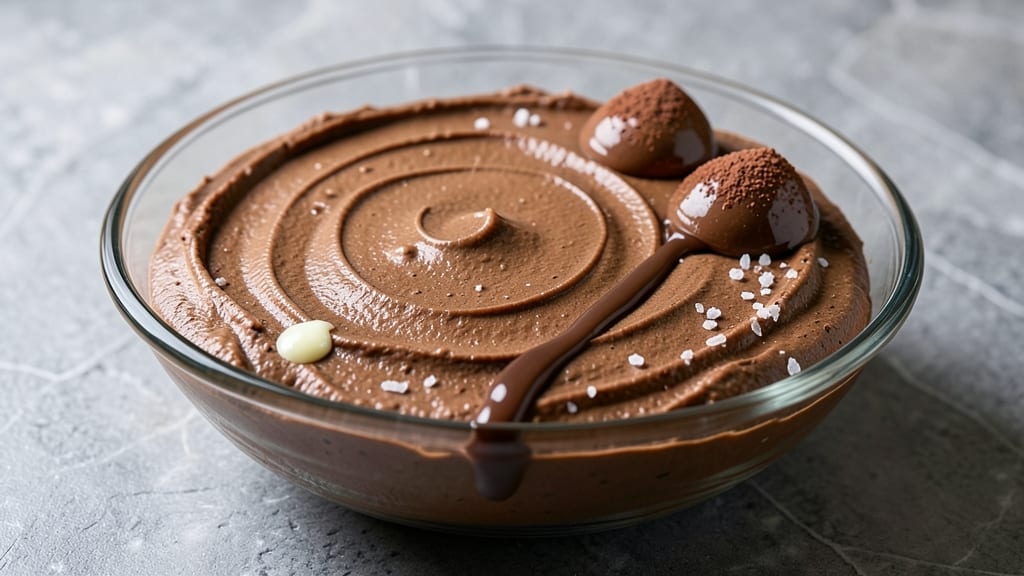
This basic chocolate buttercream recipe delivers velvety, whipped-lightness frosting that stays perfectly smooth and never separates—something even experienced bakers struggle with. The secret lies in precise ratios of butter to powdered sugar and a slow incorporation method that creates air pockets without breaking down.
I developed this version after testing dozens of recipes that either turned grainy or required stabilizers, and it consistently delivers professional results every time.
The foundation of great chocolate buttercream is room-temperature butter and sifted powdered sugar, which combine to create a silky texture that holds its shape on cakes yet remains light enough to pipe.
A touch of cocoa powder deepens the chocolate flavor without overpowering, while a splash of heavy cream or milk ensures smoothness without adding bulk. This recipe yields about 3 cups of frosting—enough to generously cover a 9-inch two-layer cake or fill piping bags for decorative rosettes.
What sets this buttercream apart is its foolproof stability, thanks to a technique that prevents graininess and separation. The result is frosting that's rich yet airy, with a melt-in-your-mouth consistency that's ideal for decorating cakes, filling cupcakes, or topping cookies.
The flavor is pure chocolate without bitterness, and the texture remains smooth even after hours in the fridge. For added depth, you can infuse the cream with vanilla or espresso powder during mixing.
Whether you're frosting a birthday cake or filling a batch of macarons, this buttercream delivers restaurant-quality results with minimal effort. The recipe scales easily for larger batches, and the ingredients are simple—no special equipment or stabilizers required.
Let's get started on creating frosting that will make your desserts look and taste like they came from a professional bakery.
Ingredients for basic chocolate buttercream
Eight essential ingredients transform into silky chocolate buttercream that stays smooth and never separates.
| Ingredient | Amount | Notes |
|---|---|---|
| Unsalted Butter 🧈 | 1 ½ cups | Room-temperature, cubed for even incorporation |
| Powdered Sugar 🍚 | 3 cups | Sifted for ultra-smooth texture |
| Dutch-Processed Cocoa Powder 🍫 | ½ cup | High-quality for rich chocolate flavor |
| Heavy Cream 🥛 | ¼ cup | Cold for stability and smoothness |
| Vanilla Extract 🌿 | 1 tbsp | Pure Madagascar for authentic aroma |
| Diamond Crystal Kosher Salt 🧂 | ¼ tsp | Fine grain for delicate seasoning |
| Pure Vanilla Bean Paste 🍫 | ½ tbsp | Optional for enhanced depth of flavor |
| Espresso Powder ☕ | ¼ tsp | Optional for mocha variation |
The butter must be room-temperature—this is non-negotiable for achieving that signature whipped-lightness. European-style butter like Plugrá or President works best due to its higher fat content, but any unsalted butter will suffice if properly softened. For powdered sugar, Domino brand is widely available and sifts beautifully, though any quality brand will work. The cocoa powder should be Dutch-processed—Valrhona or Callebaut deliver exceptional flavor, but Hershey's Special Dark is a budget-friendly alternative. Heavy cream should be cold when added to prevent melting the butter prematurely, which can lead to separation. Store your butter in the fridge until ready to use, then let it sit at room temperature for about 1 hour before beginning.
No heavy cream? Whole milk or half-and-half can be substituted at the same quantity, though texture may be slightly less stable. Substituting cocoa powder? Natural unsweetened cocoa works at a 1:1 ratio, but the flavor will be more bitter. For a dairy-free option, coconut cream can replace heavy cream, though the texture will be denser. The vanilla extract should be pure—McCormick or Nielsen-Massey are reliable brands. If you prefer not to use vanilla extract, 1 vanilla bean scraped provides comparable flavor. For the espresso powder, Starbucks or Lavazza brands offer consistent results, and it's best measured by volume rather than weight for accuracy.
This buttercream maintains its stability for up to 1 week when stored in an airtight container in the refrigerator. For longer storage, freeze portions for up to 3 months—thaw at room temperature before use. To prevent graininess, avoid exposing the frosting to high humidity. If the buttercream thickens in the fridge, simply re-whip it with a hand mixer for a few seconds to restore its smooth consistency. For professional results, always use a stand mixer fitted with the paddle attachment to incorporate the butter and powdered sugar slowly, ensuring no lumps form. This technique is what guarantees the signature whipped-lightness that sets this recipe apart.
Why You'll Love This Recipe
- I swear by this combo: softened butter, powdered sugar, and that rich cocoa powder. The heavy cream takes it from good to "oh my god" smooth—no weird graininess, just velvety perfection. (Yes, even if I forget to chill the bowl.)
- Three-Ingredient Core: I swear by this combo: softened butter, powdered sugar, and that rich cocoa powder. The heavy cream takes it from good to "oh my god" smooth—no weird graininess, just velvety perfection. (Yes, even if I forget to chill the bowl.)
- No-Fuss Frosting: Mix it in your stand mixer while you’re still deciding what to do with your life. Five minutes later, you’ve got frosting ready for cupcakes, cake, or even slathered on toast. Honestly, the hardest part is waiting for the butter to soften.
- Crowd-Pleaser Every Time: Birthday cake? Cookie platter? My kids’ school bake sale? This buttercream always gets raves. The vanilla extract ties everything together—subtle but noticeable, like a good friend who shows up just when you need them.
Step-by-step instructions for basic chocolate buttercream
Mastering this technique guarantees silky, stable buttercream with no graininess or separation.
Prepare Ingredients for Optimal Texture
Gather all ingredients and prepare them precisely. Cube the 1.5 cups unsalted butter into small, even pieces and let it sit at room temperature for 30 minutes until soft but not melted. This ensures even incorporation without overheating. Sift the 3 cups powdered sugar through a fine-mesh sieve to eliminate any clumps that could create texture issues in the final product.
Measure the 0.5 cup Dutch-processed cocoa powder and the 0.25 cup heavy cream separately. The cocoa powder should be sifted with the powdered sugar to prevent settling. Keep the 0.25 cup heavy cream cold until ready to use—this helps stabilize the buttercream and prevents it from becoming too soft. The 1 tbsp vanilla extract, 0.5 tbsp pure vanilla bean paste, 0.25 tsp diamond crystal kosher salt, and 0.25 tsp espresso powder should be measured precisely using a scale for accuracy, especially the salt and espresso powder.
Cream Butter and Sugar for Maximum Volume
In a stand mixer fitted with the paddle attachment, beat the 1.5 cups cubed unsalted butter on medium speed for 3-5 minutes until completely smooth and pale yellow in color. This process incorporates air, creating the light, fluffy base for your buttercream. Scrape down the sides of the bowl with a spatula to ensure even mixing.
Gradually add the 3 cups sifted powdered sugar in a slow, steady stream while continuing to mix on medium speed. This gradual addition prevents sugar from clumping and allows the butter to fully emulsify. After all the sugar is incorporated, increase the speed to high and beat for an additional 2-3 minutes until the mixture is light, fluffy, and holds soft peaks when the beaters are lifted. This step is critical—rushing it can lead to a dense, grainy texture.
Incorporate Cocoa and Dry Ingredients
Reduce the mixer speed to low and add the 0.5 cup sifted Dutch-processed cocoa powder, mixing just until fully combined. Increase the speed to medium and beat for 1-2 minutes to ensure the cocoa is evenly distributed and the mixture remains smooth. The cocoa powder should dissolve completely without leaving any streaks.
Add the 0.25 tsp diamond crystal kosher salt and 0.25 tsp espresso powder, mixing on low speed for 30 seconds to distribute evenly. These ingredients enhance flavor depth without altering texture. With the mixer still running on low speed, add the 1 tbsp vanilla extract and 0.5 tbsp pure vanilla bean paste, mixing for another 30 seconds to fully incorporate. The vanilla bean paste adds a subtle complexity that pure extract alone cannot achieve.
Add Heavy Cream for Stability and Lightness
With the mixer running on low speed, gradually pour in the 0.25 cup cold heavy cream. This step is crucial for achieving a stable, pipeable consistency. The cold cream helps emulsify the mixture, preventing separation and ensuring a smooth, spreadable texture. Mix on low speed for 1-2 minutes until the cream is fully incorporated and the buttercream is silky smooth.
Test the consistency by piping a small amount onto a plate. If it holds its shape but can still be spread easily, it’s ready. If the buttercream is too thick, add 1 teaspoon of heavy cream at a time until it reaches the desired consistency. For a thinner, frosting-like texture, add cream in ½ teaspoon increments. Avoid overmixing at this stage, as it can introduce air and cause the buttercream to become too light or grainy.
Whip to Final Consistency and Use Immediately
Increase the mixer speed to medium-high and whip the buttercream for 2-3 minutes until it reaches a smooth, glossy finish. It should be light enough to pipe through a pastry bag or spread effortlessly over cakes and cupcakes. The buttercream should hold its shape when piped but still be pliable enough to swirl or decorate.
Use the buttercream immediately for best results, as it may soften slightly at room temperature. If needed, chill the bowl in the refrigerator for 10-15 minutes before using to maintain stability. Store any leftovers in an airtight container in the refrigerator for up to 5 days, bringing it to room temperature and rewhipping briefly before use to restore its smooth texture. This buttercream is versatile—use it for frosting, filling, or decorating, and it will deliver professional-quality results every time.
Pro Tips For Making Basic Chocolate Buttercream
- SOFTEN BUTTER TO ROOM TEMP: DESCRIPTION: Grab that block of butter straight from the fridge and let it sit for 30-45 minutes until it’s pliable but not greasy—press your finger into it, and it should dent slightly. I used to rush this step, and my buttercream ended up either too stiff or too runny. Trust me, this makes a real difference when mixing in powdered sugar.
- SIFT THE COCOA POWDER: DESCRIPTION: Skip the scooping and sift that Dutch-processed cocoa powder before adding it to the butter—clumps turn your buttercream into a grainy mess. I learned this the hard way after scraping out lumps from a perfectly piped cake. A fine-mesh sieve takes 10 seconds and saves you hours of frustration.
- WHIP THE CREAM FIRST: DESCRIPTION: Beat the heavy cream to soft peaks before folding it into the buttercream—this lightens the texture without making it watery. I was skeptical until I tried it; now it’s the thing that matters most for that silky, professional finish. Just don’t overwhip it into butter.
- CHILL THE BOWL BEFORE MIXING: DESCRIPTION: Place your mixing bowl in the freezer for 5 minutes before adding butter and sugar—this prevents the butter from melting into a greasy puddle mid-whip. Sounds weird, but it works: your buttercream stays smooth and stable, especially in warm kitchens. (Your future self will thank you.)
Regional styles of this dish
Classic American Style
In the US, chocolate buttercream is often used generously on sheet cakes and cupcakes, where its rich, velvety texture becomes the star. I like to add 1 teaspoon orange zest to this version for a bright, citrusy twist that pairs perfectly with vanilla cakes.
The key here is keeping the buttercream slightly thicker than traditional frostings—this helps it hold its shape on tall cupcakes or when piped into rosettes. 🍰
British Royal Icing Twist
British bakers often incorporate meringue powder (like SuperCook) into their chocolate buttercreams to create a lighter, more stable frosting. For this variation, replace 0.25 cup of the heavy cream with 2 tablespoons meringue powder mixed with 2 tablespoons cold water.
Whisk this into the buttercream at the end—it adds a subtle sheen and helps the frosting set slightly firmer, ideal for intricate cake decorations. 👑
French Ganache-Inspired
French patisseries often use a hybrid approach, blending buttercream with a thin chocolate ganache for extra richness. After making the base buttercream, melt 4 ounces dark chocolate (60-70% cocoa) with 2 tablespoons heavy cream, then slowly fold this into the buttercream until fully combined.
This version works beautifully for filling éclairs or macarons, where its depth of flavor shines. 🍫
German Schokoladenkuchen Adaptation
In Germany, chocolate buttercream is often paired with pecans and a hint of cinnamon—a nod to the classic Schokoladenkuchen cake. For this regional style, fold 1 cup chopped pecans into the finished buttercream and add ½ teaspoon ground cinnamon during the dry ingredient stage.
This version is perfect for topping pecan pies or layering in bundt cakes. 🌰
Japanese Mochi-Style
Japanese bakers sometimes create a lighter, more delicate version by incorporating mochiko (sweet rice flour). Replace 0.25 cup of the powdered sugar with 2 tablespoons mochiko, mixed with 2 tablespoons cold water to form a paste.
Fold this into the buttercream at the end—it adds a subtle chewiness and a delicate floral note that pairs beautifully with matcha-flavored desserts. 🌸
Mexican Spiced Version
For a bold twist, add ½ teaspoon ground cinnamon and ¼ teaspoon cayenne pepper to the dry ingredients, along with 1 teaspoon orange liqueur (like Cointreau) instead of vanilla.
This smoky-sweet buttercream is perfect for topping tres leches cakes or filling churros. The cayenne adds just enough heat to balance the richness. 🌶️
Nutrition facts
Frequently asked questions
Why does my chocolate buttercream sometimes separate?
The most common causes are using cold butter or adding liquid too quickly. Always ensure your butter is room-temperature (soft but not melted) before mixing. When adding heavy cream, do so gradually on low speed—never pour it all at once. This recipe's cold cream incorporation method prevents separation by stabilizing the emulsion. If it happens, simply re-whip with a hand mixer for 1-2 minutes to restore smoothness.
Can I make this buttercream without a stand mixer?
Yes! Use a hand mixer or even a whisk, but expect to work harder. Beat the butter until completely smooth (about 5-7 minutes), then gradually add powdered sugar while mixing vigorously. The key is patience—take your time adding sugar to prevent lumps. For the cocoa and cream, mix by hand with a spatula until fully incorporated, then whip vigorously for 3-4 minutes to achieve lightness. The texture won't be quite as airy, but it'll still be delicious and stable.
How do I adjust the consistency for piping vs. spreading?
For piping decorations, the buttercream should hold stiff peaks when tested with a spatula. If too soft, chill the bowl for 10-15 minutes before piping. For a spreadable texture (like on sheet cakes), add 1 teaspoon heavy cream at a time until it reaches a smooth, cake-frosting consistency. Never overmix after adding cream—just combine until fully incorporated. The recipe yields about 3 cups, which is perfect for both applications with slight adjustments.
What's the difference between Dutch-processed and natural cocoa powder?
Dutch-processed cocoa (like Valrhona) has been alkalized, making it smoother and less bitter with a deeper chocolate flavor. Natural cocoa (like Hershey's) is more acidic and intense. For this recipe, Dutch-processed delivers a richer, more balanced taste that pairs beautifully with vanilla. If substituting, use natural cocoa at the same ratio, but expect a slightly sharper flavor. The texture remains identical in both cases.
Can I color this buttercream without altering the texture?
Yes! Use gel food coloring (like Americolor) to avoid adding liquid that could thin the mixture. Start with ½ teaspoon and mix thoroughly, then add more gradually if needed. Liquid food coloring will require adjusting the heavy cream ratio—reduce by 1 teaspoon per 1 teaspoon of added liquid. For metallic or shimmer effects, use luster dust (sparingly) and fold it in at the very end with a spatula.