
Desserts
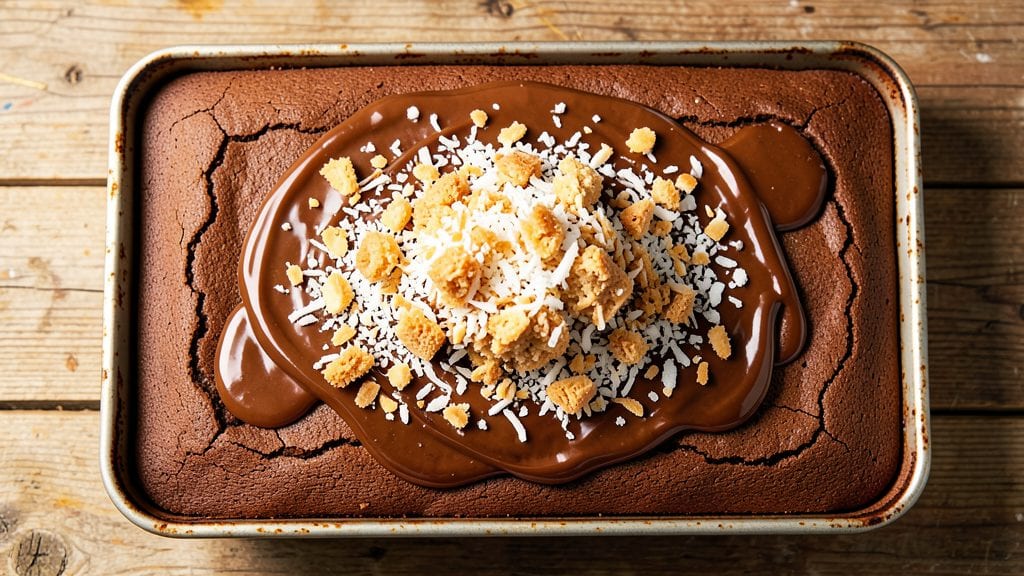
This baker’s German chocolate sheet cake recipe delivers the classic combination of rich cocoa layers, velvety chocolate ganache, and a toasted pecan-coconut crown that’s become a bakery favorite. The secret lies in balancing moisture and density—achieving a fudgy yet tender crumb that holds up to the decadent topping.
I’ve perfected this version over years of baking, ensuring every slice captures that perfect harmony of textures and flavors.
The recipe begins with a simple yet precise cake batter that relies on cocoa powder and buttermilk for depth, while the ganache layer adds luxurious richness without overpowering the chocolate base. The toasted pecan-coconut topping isn’t just decorative—it provides a satisfying crunch and nutty contrast that makes each bite unforgettable.
For an extra touch of sophistication, a splash of bourbon or espresso powder can elevate the flavors to restaurant-quality levels.
What you’ll end up with is a showstopping dessert that’s moist, flavorful, and perfectly portioned for gatherings or solo indulgence. The cake layers stay tender even after cutting, while the ganache remains glossy and the pecan-coconut crown adds a professional finish.
This isn’t just a sheet cake—it’s a masterpiece that rivals any bakery’s version, all made in your own kitchen.
Whether you’re serving it at a holiday party or treating yourself to a decadent weekend dessert, this recipe ensures every detail is accounted for. Ready to bake a cake that impresses? Let’s get started with the full instructions and tips for success.
Ingredients for baker's german chocolate sheet cake
Rich cocoa layers meet toasted pecan-coconut crown in this decadent sheet cake masterpiece.
| Ingredient | Amount | Notes |
|---|---|---|
| All-Purpose Flour 🌾 | 2 ½ cups | Sifted for light texture |
| Unsalted Butter 🧈 | 1 ½ cups | Room temperature, not melted |
| Granulated Sugar 🍚 | 2 cups | White or light brown |
| Cocoa Powder 🍫 | ¾ cup | Dutch-processed for smoothness |
| Buttermilk 🥛 | 1 ½ cups | Fresh, not powdered |
| Large Eggs 🥚 | 3 whole | Room temperature preferred |
| Baking Powder 🍞 | 1 ½ tsp | Double-acting for lift |
| Salt 🧂 | ½ tsp | Fine sea salt preferred |
| Vanilla Extract 🌸 | 2 tsp | Pure alcohol-free if needed |
| Semisweet Chocolate Chips 🍫 | 1 ½ cups | High-quality for melting |
| Heavy Cream 🥛 | 1 ½ cups | Full-fat for richness |
| Pecans 🥜 | 2 cups | Toasted, chopped coarsely |
| Sweetened Flaked Coconut 🥥 | 1 ½ cups | Toasted for enhanced flavor |
| Light Corn Syrup 🍯 | ½ cup | Or honey for variation |
| Brown Sugar 🍚 | ½ cup | Packed firmly |
The Dutch-processed cocoa powder is non-negotiable here—it delivers that smooth, velvety chocolate flavor without bitterness. Ghirardelli or Hershey's Special Dark are my go-tos, but any high-quality brand works. For the butter, Plugrá or Land O'Lakes unsalted are reliable choices, but don't substitute margarine—this cake demands real butter. The pecans? Store-bought pre-toasted work fine, but if you toast them yourself (350°F for 8-10 minutes), the flavor jumps to a whole new level. Look for raw pecans with minimal processing—they'll have more natural oil and better texture after toasting.
No buttermilk? Mix 1.5 tbsp lemon juice or vinegar with 1.5 cups milk, let sit 5 minutes. Running short on vanilla? Vanilla bean paste works too, but add half the amount since it's more concentrated. The chocolate chips can be swapped for chopped chocolate bars—just make sure they're at least 60% cacao for that proper German chocolate depth. For the ganache, if you're worried about it setting too firm, add 1 tsp corn syrup to the heavy cream before mixing. And if you're feeling fancy, a splash of bourbon (1 tsp) in the ganache adds complexity that rivals bakery versions.
This cake keeps beautifully—3 days at room temperature covered loosely, or 5 days refrigerated in layers separated by parchment. For the ganache, store it in an airtight container between layers, and it'll stay glossy for 1 week. The toasted pecan-coconut topping? Freeze any extras in a sealed bag for 3 months—just toast again before using. I always bake this in a half-sheet pan (18x13 inches) for perfect portion sizes, but if you're using a full sheet pan, reduce the batter by about 15% to avoid overflow.
Why You'll Love This Recipe
- One-Bowl Wonder: I swear by this recipe on days when I’d rather not wash a dozen bowls—just toss everything into one, mix, and bake. The buttermilk keeps it tender without extra effort, and the cocoa butter from that good-quality cocoa powder? It melts into a fudgy dream with zero fuss.
- Peanut Butter Pecan Magic: That rich chocolate layer gets a serious upgrade when you fold in the classic German chocolate filling—smooth peanut butter and toasted pecans cut through the sweetness like a warm hug. Honestly, the first time I tried it, I nearly ate the whole pan raw.
- Weeknight Crowd Pleaser: Slice it for breakfast, pack squares for lunch, or serve it at a potluck—this cake handles everything. The buttermilk keeps it moist for days, so leftovers taste just as good the third day as they did fresh out of the oven. (Yes, even on a Tuesday night.)
- Budget-Friendly Luxury: You’re using pantry staples here—no weird ingredients or pricey shortcuts. The butter and sugar do all the heavy lifting, while the cocoa powder gives it that indulgent vibe without breaking the bank. My kids ask for it all the time, but my wallet stays happy.
Step-by-step instructions for German chocolate sheet cake
Here's how to create a rich, fudgy cake with a toasted pecan-cocoa crown that tastes like a bakery masterpiece.
Prepare the Cake Layers
Preheat your oven to 350°F and grease a 9x13-inch sheet pan with butter, then dust with flour. In a large mixing bowl, combine the 2.5 cups all-purpose flour, 1.5 tsp baking powder, and 0.5 tsp salt. Whisk until evenly distributed—this ensures your cake rises properly without developing gluten that would make it tough.
In a separate bowl, cream together the 1.5 cups unsalted butter and 2 cups granulated sugar on medium speed until light and fluffy, about 3-4 minutes. Add the 3 whole large eggs one at a time, mixing well after each addition. Scrape down the sides of the bowl to ensure everything is fully incorporated. This step is crucial for creating a tender crumb.
Gradually add the dry ingredients to the wet mixture, alternating with the 1.5 cups buttermilk, beginning and ending with the flour mixture. Mix on low speed until just combined—overmixing develops gluten, which can make your cake dense. Stir in the 2 tsp vanilla extract and 0.75 cup cocoa powder until smooth. Fold in the 1.5 cups semisweet chocolate chips by hand to maintain even distribution.
Bake the Cake Layers
Spread the batter evenly into the prepared sheet pan, smoothing the top with a spatula. Bake for 25-30 minutes, or until a toothpick inserted into the center comes out clean. The edges should be set, but the center should still have a slight bounce—this ensures a moist, fudgy texture. Rotate the pan halfway through baking if your oven has hot spots.
Let the cake cool in the pan for 10 minutes before transferring it to a wire rack to cool completely. This gradual cooling prevents cracking. While the cake cools, prepare the filling and topping so you can assemble everything while the cake is still warm enough to hold the layers together.
Make the German Chocolate Filling
In a medium saucepan, combine the 1.5 cups heavy cream, 0.5 cup light corn syrup, and 0.5 cup packed brown sugar. Bring to a gentle simmer over medium heat, stirring occasionally until the sugar dissolves. Remove from heat and let it cool slightly—this mixture should be warm but not scalding when you add the eggs.
In a separate bowl, whisk the 3 whole large eggs until smooth. Slowly pour the warm cream mixture into the eggs while whisking continuously to temper them. This prevents the eggs from curdling. Pour the mixture back into the saucepan and cook over low heat, stirring constantly, until it thickens enough to coat the back of a spoon, about 5-7 minutes. Remove from heat and stir in 1.5 cups toasted, chopped pecans. Let the filling cool completely before using.
Assemble the Cake
Once the cake layer is completely cool, spread the German chocolate filling evenly over the top. Press gently to ensure it adheres to the cake. In a small bowl, combine the 1.5 cups sweetened flaked coconut and 2 cups toasted, chopped pecans. Sprinkle this mixture evenly over the filling, pressing down lightly so it stays in place.
For the crown, melt the 1.5 cups semisweet chocolate chips in a microwave-safe bowl in 30-second intervals, stirring between each interval until smooth. Drizzle the melted chocolate over the top of the cake in a zigzag pattern, allowing it to create a decorative crown effect. Use a knife to create peaks and valleys for texture, mimicking a bakery-style finish.
Chill and Serve
Refrigerate the cake for at least 2 hours before slicing. This allows the filling to set and the flavors to meld together. The cake will hold its shape better after chilling, making it easier to slice cleanly. Serve at room temperature for the best texture—this cake is rich and fudgy, so letting it sit for a few minutes before serving enhances the experience.
Slice into 12 even pieces and enjoy the perfect balance of moist cake, creamy filling, and crunchy pecan-coconut topping. Each bite delivers a harmonious blend of cocoa, caramelized nuts, and sweet coconut, making this a showstopper for any occasion.
Pro Tips For Making Baker'S German Chocolate Sheet Cake
- Melt Butter Slowly: German chocolate cake relies on that buttery richness, so don’t rush melting the butter for the frosting. I learned this the hard way—when I cranked the heat too high, the butter separated and the frosting turned grainy. Use a double boiler or low microwave heat (30-second bursts) until it’s just warm to the touch, not hot.
- Sift the Cocoa: That dusty cocoa powder isn’t just for show—it prevents lumps in the batter. I used to just dump it in, and the cake ended up with weird pockets of dry cocoa. Sift it with the flour first, then whisk the mixture to break up any remaining clumps. Trust me, your cake will be smoother and richer.
- Don’t Overmix the Batter: The moment the buttermilk and eggs hit the dry ingredients, stop stirring. I’ve seen people mix until the batter looks like glue, and it always makes the cake dense. Fold just until combined—lumps are fine, overworking ruins the texture. A spatula’s gentle swirl does the job.
- Use Room-Temp Butter for Frosting: Cold butter in the frosting? That’s a recipe for clumps and a struggle to pipe. Take the butter out of the fridge 30–60 minutes before making the frosting—it’ll cream up smoothly and give you that perfect, spreadable consistency. No one wants to fight their frosting.
Pro cooking tips for this recipe
Butter Temperature Matters
The room-temperature butter is non-negotiable for this cake—it should be soft enough to press with your finger but not melted. I like to let my butter sit out for 1-2 hours before mixing, or microwave it in 10-second bursts until just pliable.
Cold butter creates dense layers, while melted butter can make the cake greasy. Test it by pressing your finger into the butter—it should leave a slight indentation but not spread completely. 🧈
Cocoa Quality Elevates
Using Dutch-processed cocoa powder (like Ghirardelli or Hershey's Special Dark) makes all the difference—it’s smoother and less bitter than natural cocoa. Avoid cocoa mixes with baking powder or sugar added, as they can alter the cake’s texture.
For extra depth, I sometimes add 1 tsp instant espresso powder to the batter, which enhances the chocolate flavor without adding bitterness. This is a pro trick I picked up from bakery chefs.
Baking Powder Activation
Make sure your baking powder is fresh—old baking powder loses its lift. Test it by mixing 1 tsp baking powder with 2 tbsp hot water; if it fizzes vigorously, it’s active.
For this recipe, I use double-acting baking powder (like Clabber Girl), which reacts twice: once when wet and again when heated. This ensures your cake rises properly in the oven and doesn’t collapse as it cools. 🍞
Ganache Consistency Trick
For a silky-smooth ganache, heat the heavy cream to just under a simmer (around 180°F) before pouring it over the chopped chocolate. This temperature ensures the chocolate melts evenly without seizing. If your ganache looks too thick, warm it gently over a double boiler.
For a luxurious finish, whisk in 1 tsp bourbon or vanilla bean paste while the ganache is still warm—this adds a sophisticated depth that bakery versions often include.
Pecan Toasting Perfection
Toast your pecans in a 350°F oven for 8-10 minutes, stirring halfway, until fragrant and golden. Over-toasting burns them, making them bitter, while under-toasting leaves them raw and bland.
For extra flavor, I like to add ½ tsp cinnamon to the pecans while they toast—it pairs beautifully with the coconut and chocolate. Let them cool completely before chopping to avoid releasing their oils prematurely. 🥜
Chilling for Clean Slices
Never skip the 2-hour chilling step—this is what makes the difference between a cake that crumbles and one that slices cleanly. The filling needs time to set, and the layers firm up enough to hold their shape.
If you’re short on time, pop the cake in the freezer for 30 minutes before slicing, but bring it to room temperature before serving. The contrast of warm cake and cool filling is what makes this dessert truly special. ❄️
Nutrition facts
Frequently asked questions
Can I make this cake in a 9x13-inch pan instead of a half-sheet?
Yes! This recipe is designed for a 9x13-inch pan and will work perfectly. The instructions already specify this size, so no adjustments are needed. The cake will have a slightly thicker layer than a half-sheet, but the flavor and texture will remain the same. Just be sure to bake it for 25-30 minutes until a toothpick comes out clean.
How do I prevent the cake from cracking?
Cracking usually happens when the cake cools too quickly. Let the cake cool in the pan for 10 minutes before transferring it to a wire rack, and avoid placing it in a cold environment right after baking. For extra insurance, brush the warm cake with a simple syrup (equal parts sugar and water, heated until dissolved) before adding the filling. This helps retain moisture and prevents drying.
Can I substitute the pecans or coconut for other nuts or toppings?
Swap pecans for walnuts, almonds, or even hazelnuts—just toast them first for the best flavor. For coconut, try toasted macadamia nuts or chopped candied ginger for a unique twist. If you want to skip nuts entirely, a layer of crushed graham crackers or a sprinkle of sea salt flakes can add interesting texture and contrast. Just remember, the toasted element is key for flavor.
Why is my ganache too thick or grainy?
Grainy ganache usually means the chocolate wasn't melted evenly or the cream was too hot. Heat the heavy cream to just under a simmer (180°F) before pouring it over the chocolate, and stir gently until smooth. If it's too thick, warm it gently over a double boiler while stirring. For extra smoothness, whisk in 1 tsp corn syrup or a splash of bourbon to help emulsify the mixture.
Can I bake this cake ahead of time?
This cake actually tastes better the next day! Assemble it completely, then refrigerate uncovered for 24 hours to let the flavors meld. The filling will set more firmly, and the cake layers will develop deeper flavor. If storing longer than 2 days, wrap the cake tightly in plastic wrap and refrigerate. Bring it to room temperature before serving for the best texture.