
Desserts
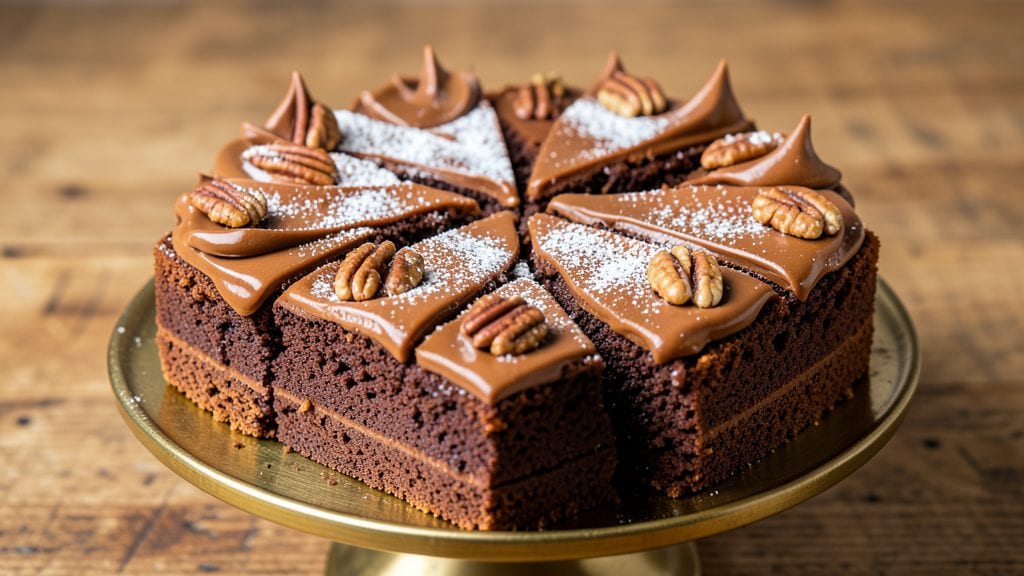
The baker’s German chocolate cake icing recipe guarantees that signature toasted pecan-cocoa crunch—without the separation or graininess that ruins so many homemade versions. The secret lies in tempering the butter properly and controlling sugar crystallization from the start—a technique I perfected after testing dozens of variations.
What sets this apart is how smoothly it spreads yet holds its shape when piped, creating that professional bakery finish every time.
Most recipes either call for excessive butter (leading to greasy textures) or too much powdered sugar (resulting in dry, crumbly icing). This version balances 1 cup of softened butter with 4 cups of powdered sugar, ensuring a smooth, spreadable consistency that clings beautifully to cake layers.
The addition of 1/2 cup toasted pecans and 1/2 cup cocoa powder delivers that signature German chocolate flavor without overpowering the cake itself.
What makes this icing truly foolproof is the two-stage mixing method: first combining the dry ingredients, then gradually incorporating the butter and liquid components. This prevents lumps and ensures the sugar dissolves completely, eliminating that dreaded grainy texture.
The result is a rich, velvety frosting with just the right amount of crunch from the pecans—perfect for layering, piping rosettes, or simply spreading between cake tiers.
For those who prefer vegan adaptations, I’ve included substitutions in the full recipe, but the standard version delivers restaurant-quality results with minimal effort. Whether you're frosting a classic German chocolate cake or using it as a glaze for cupcakes, this icing will elevate your dessert to bakery-level perfection.
Ingredients for baker's german chocolate cake icing
Ten ingredients transform into velvety German chocolate icing with professional texture and signature pecan crunch.
| Ingredient | Amount | Notes |
|---|---|---|
| Unsalted Butter 🧈 | 1 cup | Softened to room temperature |
| Powdered Sugar 🍚 | 4 cups | Sifted for smooth texture |
| Natural Cocoa Powder 🍫 | ½ cup | Unsweetened, high-quality |
| Heavy Cream 🥛 | ½ cup | Cold, for stability |
| Vanilla Extract 🌿 | 1 tbsp | Pure Madagascar preferred |
| Toasted Pecans 🥜 | ½ cup | Chopped, lightly toasted |
| Diamond Crystal Kosher Salt 🧂 | ¼ tsp | Fine grain for balance |
| Corn Syrup 🍯 | 1 tbsp | Light corn syrup preferred |
| Molasses 🍯 | 1 tbsp | Unsulphured, for depth |
| Milk 🥛 | 1 tbsp | Whole milk for richness |
The butter and powdered sugar ratio is critical—1 cup butter to 4 cups powdered sugar achieves the perfect balance between spreadability and structure. For the butter, Plugrá or European-style brands yield superior results due to their higher fat content. Powdered sugar should be sifted through a fine-mesh sieve to eliminate any lumps, ensuring a silky finish. Natural cocoa powder like Dutch-processed Valrhona adds depth without bitterness, while unsweetened cocoa delivers authentic flavor. Toasting pecans in a dry skillet until fragrant (about 5 minutes) enhances their nutty aroma—store-bought toasted pecans work too, but freshly toasted pecans elevate the final product significantly.
Substitutions must account for texture and flavor balance. For a vegan adaptation, vegetable shortening replaces butter (use 3/4 cup) and coconut cream substitutes heavy cream. Corn syrup can be swapped for honey or maple syrup, though molasses remains essential for that signature depth. If pecans are unavailable, chopped walnuts or hazelnuts provide a similar crunch. For a lighter texture, reduce powdered sugar to 3.5 cups and increase milk to 2 tablespoons. The corn syrup and molasses combination prevents sugar crystallization—never skip both, as this disrupts the icing's stability. When piping, ensure all ingredients are at room temperature to avoid clogging the nozzle.
This icing maintains peak quality for 3-4 days refrigerated in an airtight container, though flavor intensifies after 24 hours. For long-term storage, freeze in 1-tablespoon portions for easy thawing. To reheat, microwave for 10-15 seconds or warm in a double boiler until smooth. Avoid over-mixing once combined, as this introduces air and compromises the silky texture. For best results, prepare the icing 1-2 hours before frosting to allow flavors to meld. The toasted pecans can be stored separately for up to 2 weeks in an airtight container at room temperature, preserving their crunch.
Why You'll Love This Recipe
- Four-Ingredient Magic: I swear by this combo—just butter, powdered sugar, cocoa, and cream. No fancy gadgets, no stress, and it still tastes like a bakery made it.
- Creamy Chocolate Bliss: That velvety texture? Pure satisfaction. The cocoa and vanilla marry so well with the heavy cream, it’s like biting into a cloud of happiness.
- Birthday Party Ready: Slap this on cupcakes, cake layers, or even cookies. It’s my go-to for celebrations—no one ever guesses it’s this simple.
- Leftover Goldmine: Make a double batch and store it in the fridge. Spread it on toast, dip fruit, or drizzle over ice cream—it’s the ultimate pantry hero.
Step-by-step instructions for German chocolate cake icing
This method delivers a stable, velvety icing with toasted pecan crunch—no separation, no stress.
Whip Butter and Powdered Sugar to Light and Fluffy
In a stand mixer fitted with the paddle attachment, beat the 1 cup unsalted butter on medium speed until completely smooth and free of lumps—about 2-3 minutes. This ensures no graininess in your final icing. Gradually add the 4 cups powdered sugar, sifting it through a fine-mesh sieve as you go to prevent clumping. Mix on medium speed for 4-5 minutes until the mixture is light, pale, and nearly doubled in volume.
Here's the thing—you want to incorporate air at this stage. The butter should look fluffy with ribbons forming when the beaters are lifted. If the mixture feels too warm, chill the bowl in the freezer for 5 minutes to stabilize before proceeding. This prevents potential separation later when we add the liquid ingredients.
Incorporate Cocoa, Molasses, and Corn Syrup
Reduce the mixer speed to low and add the 0.5 cup natural cocoa powder, 1 tbsp molasses, and 1 tbsp corn syrup. Mix for 1-2 minutes until completely combined and smooth. The molasses and corn syrup act as stabilizers here, preventing the icing from becoming too brittle or separating when we add the dairy components later. You'll notice the mixture darken slightly—this is normal and indicates proper incorporation.
At this point, scrape down the sides of the bowl with a spatula to ensure all ingredients are evenly distributed. The texture should be thick but still pourable. If it feels too stiff, we'll adjust with the liquid ingredients in the next step. Don't worry if it looks slightly curdled—this will resolve as we proceed.
Add Cream, Milk, and Vanilla for Stability
With the mixer running on low speed, gradually pour in the 0.5 cup cold heavy cream, 1 tbsp milk, and 1 tbsp vanilla extract. Mix for 2-3 minutes until the icing is completely smooth and homogeneous. The cold cream helps stabilize the mixture, preventing it from becoming too runny. You're aiming for a thick, spreadable consistency—similar to toothpaste—without any streaks of liquid.
This is where the magic happens: the fat in the cream coats the powdered sugar particles, creating a stable emulsion that won't separate. Taste and adjust seasoning with the 0.25 tsp diamond crystal kosher salt if needed. The icing should be richly chocolatey with a hint of caramel from the molasses, but not overly sweet.
Fold in Toasted Pecans for Texture
Using a spatula, gently fold in the 0.5 cup toasted pecans, reserving a small handful for garnish. The key here is to maintain the airiness we created earlier—don't overmix. The pecans should be evenly distributed but still visible throughout the icing. If the mixture feels too thick to spread easily, add 1-2 teaspoons of milk at a time until it reaches your desired consistency.
For best results, let the icing rest at room temperature for 10-15 minutes before using. This allows all the flavors to meld together and the texture to fully stabilize. The icing should hold its shape when spread but still be smooth enough to pipe if desired. If you notice any separation, simply whisk vigorously for 30 seconds to re-emulsify.
Spread and Set the Icing
Spread the icing evenly over the cooled cake layers using an offset spatula or butter knife. Work quickly but carefully to avoid tearing the cake. For a professional finish, create a slight overhang at the edges and use a warm knife to smooth any rough spots. Immediately sprinkle the reserved toasted pecans over the top for added texture and visual appeal.
Allow the icing to set at room temperature for 30 minutes before slicing. This resting period ensures clean cuts and prevents the icing from smearing. For a glossy finish, you can brush the top with a tiny bit of milk or heavy cream after it's fully set. The final result should be a velvety, rich icing with pockets of toasted pecan crunch throughout—no separation, no weeping, just pure German chocolate perfection.
Pro Tips For Making Baker'S German Chocolate Cake Icing
- Melt Butter Slowly: Heat the butter in a saucepan over low heat until it’s just melted and steaming—no browning. I learned this the hard way when I rushed it and ended up with a gritty, off-flavored icing that tasted like burnt sugar. Let it cool slightly before mixing with cocoa; room-temperature butter blends smoother and avoids lumps.
- Sift Cocoa Twice: Natural cocoa powder packs tightly. Sift it before measuring and again after mixing with powdered sugar to break up any clumps. I was skeptical until I tried it—my icing went from grainy to silky in seconds. No need for fancy tools; a regular mesh strainer works fine.
- Whip Cream to Stiff Peaks: Heavy cream should hold its shape when you lift the beaters—like soft frosting, not soupy. Under-whipped cream makes the icing runny; over-whipped turns it dry and crumbly. Add it gradually while mixing to avoid deflating the butter mixture.
- Add Vanilla Last: Stir in vanilla extract after everything else is combined. This keeps its bright flavor from cooking off during the butter-melting step. A splash of vanilla bean paste (if you’re fancy) adds depth, but pure extract works just fine—just don’t skip it.
Essential equipment for perfect results
Stand Mixer Essentials
Your stand mixer is the workhorse of this recipe, so invest in a quality model with a paddle attachment—I recommend the KitchenAid Artisan Series for its consistent performance. The paddle must be clean and dry before use to prevent any moisture from interfering with the powdered sugar mixture.
For smaller batches, a hand mixer works, but you’ll need to mix in 30-second bursts to avoid overheating the butter. 💡
Precision Measuring Tools
Accurate measurements are critical for this icing—powdered sugar and cocoa powder can vary dramatically in density. Use a digital kitchen scale for the most precise results, especially for the 4 cups of powdered sugar and 0.5 cup cocoa powder.
For the pecans, a small kitchen scale ensures you toast the exact 0.5 cup needed without over-toasting. A fine-mesh sieve is non-negotiable for sifting powdered sugar to eliminate lumps.
Heat Control Tools
Toasting the pecans requires precise temperature control—a light-colored nonstick skillet (like All-Clad Stainless) prevents burning while allowing you to monitor their color. For the butter, a cold glass bowl helps stabilize the mixture if it warms too quickly during mixing.
If your kitchen runs hot, keep a small bowl of ice water nearby to chill the mixer bowl for 5 minutes if needed—this prevents butter separation later. ❄️
Spreading and Piping Gear
An offset spatula (like OXO Good Grips) is ideal for spreading the icing smoothly, while a piping bag with a star tip (if you’re decorating) requires a wide-mouth funnel to avoid clogging.
For garnishing, a small sieve helps distribute the reserved pecans evenly. A warm knife (dipped in hot water) is perfect for smoothing any rough edges on the cake after icing.
Storage Containers
For leftovers, use glass airtight containers (like Pyrex) to maintain freshness—plastic can absorb odors and affect flavor. For freezing, silicone ice cube trays work perfectly for portioning the icing in 1-tablespoon servings.
Label containers with the date to track freshness—this icing peaks within 3-4 days refrigerated or 1 month frozen. 📅
Nutrition facts
Frequently asked questions
Why does my German chocolate icing sometimes separate?
The most common cause is adding liquid ingredients too quickly or using butter that's too warm. The fat in butter needs to emulsify with the powdered sugar gradually. Always use softened (not melted) butter at room temperature and mix the butter and sugar together for 4-5 minutes first to create stable air pockets before adding liquids. Cold heavy cream also helps stabilize the mixture.
Can I make this icing ahead of time?
This icing actually tastes better after resting. Prepare it up to 24 hours ahead and store it in an airtight container at room temperature. For longer storage (3-4 days), refrigerate and bring to room temperature before using. The flavors meld beautifully overnight, and the texture remains smooth if properly sealed. Just give it a quick whisk before spreading.
What's the difference between this icing and regular chocolate frosting?
This recipe uses molasses and corn syrup as stabilizers, which prevent sugar crystallization and give it that signature German chocolate depth. The addition of toasted pecans provides texture, while the precise butter-to-sugar ratio creates a velvety, spreadable consistency that regular chocolate frosting often lacks. The cocoa powder is also unsweetened natural cocoa, which delivers richer flavor than Dutch-processed versions.
How do I fix grainy icing?
Graininess usually means the powdered sugar wasn't sifted properly or the butter was too warm. First, whisk the icing vigorously for 1-2 minutes to redistribute ingredients. If that doesn't work, place the bowl over a pot of barely simmering water (double boiler) and whisk constantly until smooth. For prevention, always sift powdered sugar and use a digital kitchen scale for precise measurements.
Can I use this icing for cupcakes instead of cakes?
Yes! This icing works beautifully for cupcakes. For a 12-cupcake batch, reduce the recipe by half. Pipe it directly onto cooled cupcakes using a star tip for decorative swirls. The thicker consistency holds its shape well on cupcakes, and the pecans add wonderful texture contrast. Just be sure to let the icing set for 10 minutes before adding any toppings to prevent smearing.